
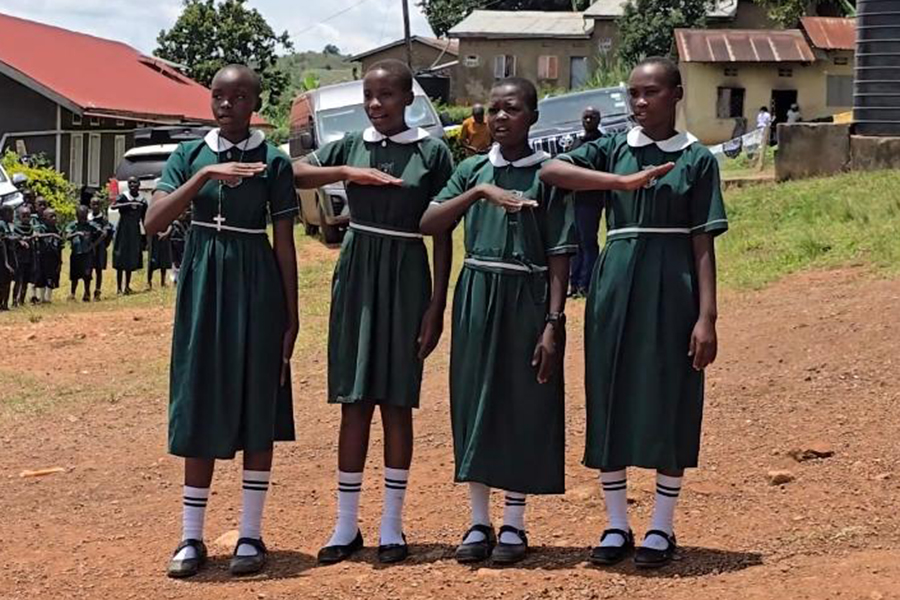
The government has renewed its commitment to eliminating violence against children in schools as education stakeholders warned that abuse, neglect and unsafe learning environments continue to deny thousands of learners their right to quality education.
The call was made during the two-day National Good School Symposium held in Kampala under the theme, "Sustaining Violence-Free Schools: National Symposium on the Good School Toolkit."
The meeting brought together officials from the Ministry of Education and Sports, the Ministry of Gender, Labour and Social Development, district education leaders, teachers, learners, civil society organisations, researchers and development partners to discuss strategies for protecting children in schools.
Research findings presented during the symposium showed that violence remains a significant barrier to education in Uganda.
According to the study, 28 per cent of women aged 18–24, 25 per cent of girls aged 13–17, 27 per cent of men aged 18–24 and 21 per cent of boys aged 13–17 reported missing school because of physical violence.
The findings also indicated that 35 per cent of girls had experienced sexual violence compared with 17 per cent of boys, underscoring the need to strengthen child protection systems within schools.
Launching the symposium, State Minister for Primary Education Phyllis Chemutai said Uganda has established several laws and policies to safeguard children, including the Children (Amendment) Act, the National Strategy to End Violence Against Children in Schools and the National Guidelines for Safe School Zones.
However, she said corporal punishment and other forms of abuse remain prevalent in many schools.
“Every child deserves to learn in a safe and supportive environment. We must move away from violent forms of discipline and embrace approaches that protect children's dignity and promote positive learning,” Chemutai said.
She emphasised that protecting children is a shared responsibility requiring the involvement of teachers, parents, communities and other stakeholders.
The minister also expressed concern about poor nutrition among learners, noting that many children attend school hungry or suffer health-related challenges that affect concentration and academic performance.
“Improving school feeding programmes, strengthening enforcement of child protection laws and encouraging food production in schools are critical steps towards creating safe and productive learning environments,” she said.
Chemutai reaffirmed government's target of eliminating corporal punishment in schools by 2030.
Presenting the research findings, Prof. Eddy Walakira of Makerere University's Department of Social Work and Social Administration described violence as a learned behaviour that can be replaced through compassion, respect and positive relationships.
He said violence in schools extends beyond physical punishment to include sexual abuse, emotional violence, bullying, harassment, child labour, neglect and the denial of basic necessities such as food, shelter and scholastic materials.
“Violence is not limited to physical punishment. A child who is denied food, sent home because of school fees or lacks scholastic materials also experiences forms of neglect that negatively affect learning and development,” Walakira said.
He noted that violence against children remains a global concern, with an estimated one billion children aged between two and 17 years experiencing some form of violence each year. He added that girls and children living with disabilities remain at greater risk of abuse.
The symposium also highlighted the impact of the Good School Toolkit, an initiative developed by Raising Voices in partnership with the Ministry of Education and Sports in 2009 to promote violence-free schools.
According to Raising Voices Co-Director Prossy Nakanjako, an independent evaluation conducted between 2012 and 2014 found that learners in schools implementing the toolkit were 42 per cent less likely to experience physical violence from teachers and school staff.
The study also found that teachers in participating schools were 50 per cent less likely to use physical punishment than those in schools that had not adopted the programme.
“The Good School Toolkit demonstrates that when schools invest in positive relationships, respect and participation, violence can be significantly reduced,” Nakanjako said.
The programme has since expanded to more than 2,500 schools across 34 districts.
Speaking on implementation, Hassan Muluusi said the programme's success has been driven by involving the entire school community through teacher committees, learner committees and community structures that promote children's safety and participation.
However, he acknowledged that sustaining the initiative remains challenging, particularly in urban schools, and called for stronger collaboration among government, schools, parents and development partners.
“Protecting children requires continuous commitment. The responsibility does not end when a project closes; it must become part of the culture of every school,” Muluusi said.
Participants from districts including Kampala, Wakiso, Luweero, Lira and Kabarole are expected to develop recommendations to strengthen child protection systems and ensure that every learner studies in a safe, inclusive and violence-free environment.
